
Mukherjee could not implement nine of the promises he made in his Budget for 2009-10 and most of these pertained to significant areas of the economy.
'Prices can be adjusted now. The government can even temporarily cut taxes'.

If a public debate ended in a near-ban on Bt brinjal, the next review could well end up the other way.

Take a look at government subsidies and their growth as a percentage of GDP over this period.

In February 1997, Mr Chidambaram fixed the income-tax rates for individuals at 30 per cent, 20 per cent and 10 per cent, depending on specific income slabs. The rates have not changed since then, although some finance ministers have imposed surcharges on these rates and some have withdrawn them.

The government may take the first step towards fiscal consolidation in Budget 2010-11 by partially rolling back tax cuts given to the industry last year. The service tax rate may be restored to 12 per cent, while excise duty could be increased marginally.
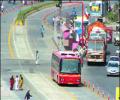
The ministry of urban development has asked the finance ministry to lower the duty in order to promote the public transportation system in the country.
Mitra will take over from P V Bhide after January 31.

The fewer the number of central ministries that matter, the better the efficacy of India's reforms.

The government may take the first step towards fiscal consolidation in Budget 2010-11 by partially rolling back tax cuts given to the industry last year. The service tax rate may be restored to 12 per cent, while excise duty could be increased marginally.
As the ministry of finance gets into the Budget mode, its officials perhaps want to tell themselves, "All is well". So, they have none other than Aamir Khan, alias Rancho of recent Bollywood blockbuster 3 Idiots, talking to them this weekend on Cinema and Society.

From withdrawing the stimulus to implementing the Finance Commission proposals, the FM has his task cut out.
While Finance Minister Pranab Mukherjee is aiming for a return to the path of fiscal prudence, various departments of the central government appear to be out of sync.

Hindutva was arguably one of the big political ideas of the 1990s. The Bharatiya Janata Party may have begun nurturing it earlier, but it was only during the last decade of the 20th century that the idea manifested itself as a powerful concept to earn for its practitioners rich electoral dividends.

A fresh $1-billion (nearly 4,600-crore) loan from the World Bank under the Jawaharlal Nehru National Urban Renewal Mission (JNNURM), to be routed through the Union government, would be linked to cities adopting certain efficiency parameters.

Although Mamata Banerjee's white paper points out areas of concern, it lacks the courage to confront them, says A K Bhattacharya.
Home Minister Palaniappan Chidambaram's reply last week to the debate in Parliament on the Liberhan Commission's report would largely be seen as the United Progressive Alliance government's comprehensive indictment of the role of the Bharatiya Janata Party and its leaders in the demolition of the disputed structure in Ayodhya on December 6, 1992.

The government is likely to ease the incidence of minimum alternate tax, or MAT, on infrastructure companies.
It not only wants the ministry of petroleum and natural gas to rework the under-recovery figure for the current year but has also decided to look at the issue of oil subsidies only in February 2010, when the next Budget will be announced.
They want more cash, forex, higher bond coupons and increase in market prices for petrol, diesel, LPG.
 © 2026 Rediff.com - Advertise with us - Disclaimer - Privacy Policy - Sitemap - Feedback - About us - Terms of use - Grievances